Dangerous goods · SOC tank
Getting a US-bound tank shipment ready to load.
A shipper-owned tank was booked from Hong Kong to Long Beach, but its booking status, declared weight and rate filing still needed attention. We coordinated the corrections and operating requirements through to carrier-recorded loading.
4 MIN READ

Photo: Andrew Smith

- Port of loading · POL
- Hong Kong
- Port of discharge · POD
- Long Beach, United States
- Equipment
- 1 × 40-foot shipper-owned tank
Restarting the shipment meant checking more than space.
After putting an earlier shipping plan on hold, the customer asked us to resume the tank’s shipment to the United States. The empty ISO tank had last contained refrigerated liquid helium and retained a declared residue. It was being handled as dangerous goods, Class 2.2 / UN1963, and as shipper-owned equipment (SOC).
The January booking had several issues to resolve: a premature confirmation in the carrier’s system, an expired rate requiring filing, and conflicting figures for verified gross mass (VGM). The customer also needed the gate-in arrangements clarified, with the Hong Kong DG receiving window approaching.
Turning booking updates into practical next steps.
Confirm when the booking could actually be used.
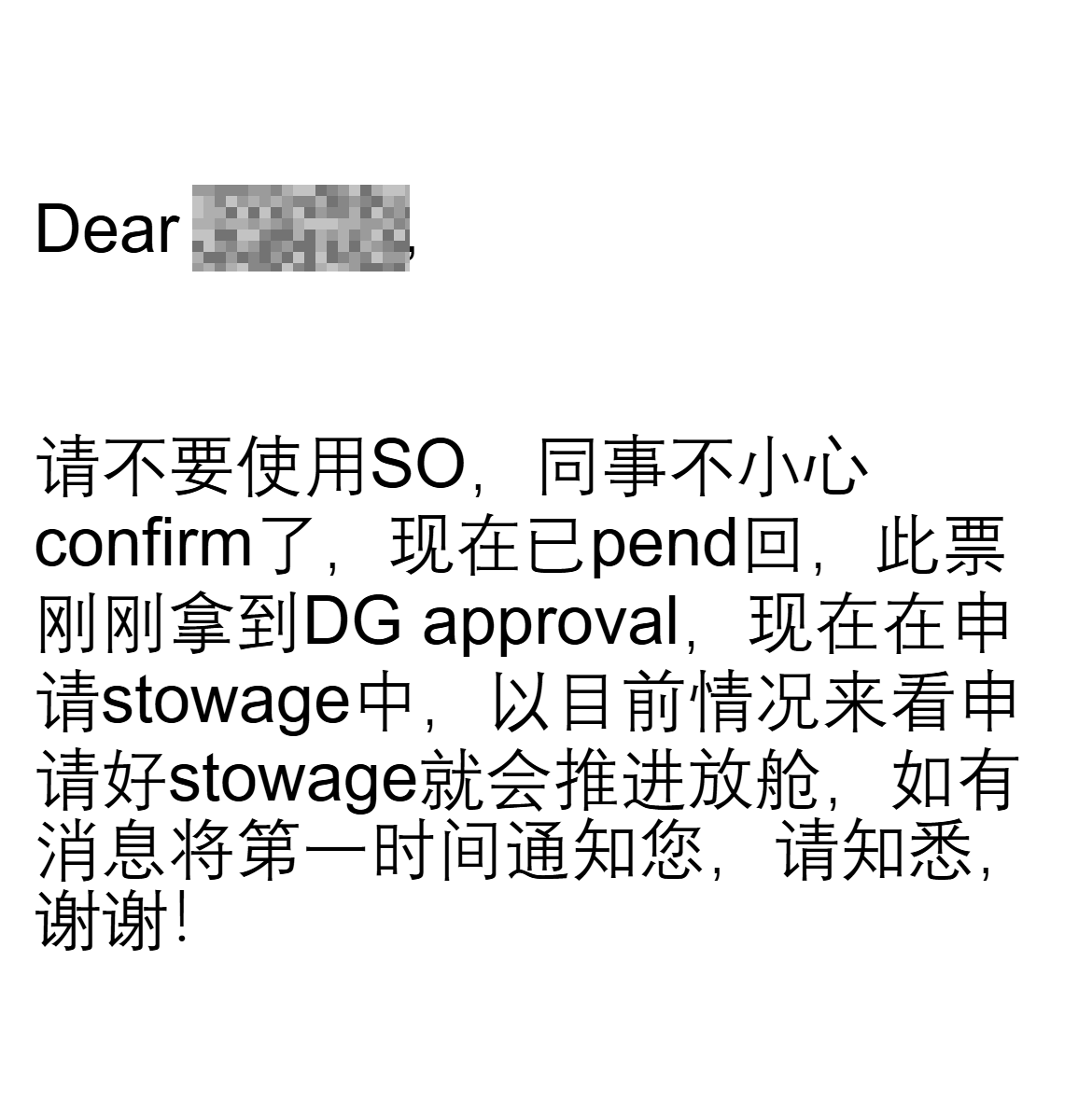
We updated the DG and SOC documents for the new booking, answered the carrier’s equipment questions and checked whether the confirmed status shown online meant the shipping order could be released. The carrier replied that confirmation had been entered by mistake and reversed: DG approval had been obtained, but stowage approval was still pending.
The following day, the carrier expressly released the booking. We then sent the shipping order and the documentation, VGM and terminal cutoffs to the customer, and clarified how to collect the seal for the shipper-owned tank.
Booking status clarified
The carrier withdraws a mistaken confirmation: DG approval is in place, while stowage approval is still pending.
Reconcile the tank weight and follow through on the correction.
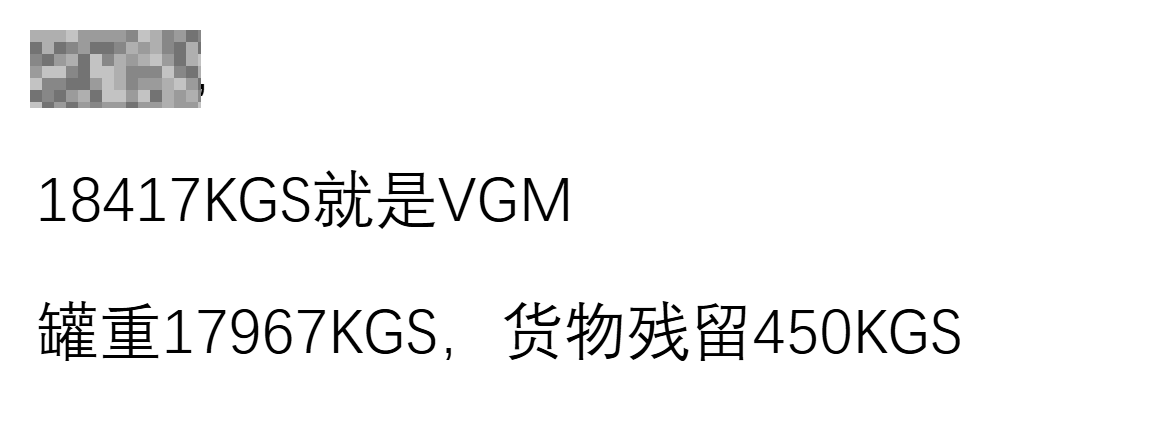
The customer’s initial VGM calculation totalled 36,384 kg. We asked it to recheck the figures. The customer clarified that 18,417 kg was already the total: a tank tare of 17,967 kg plus 450 kg of declared residue. The corrected VGM submission of 18,417 kg was accepted by the carrier that afternoon.
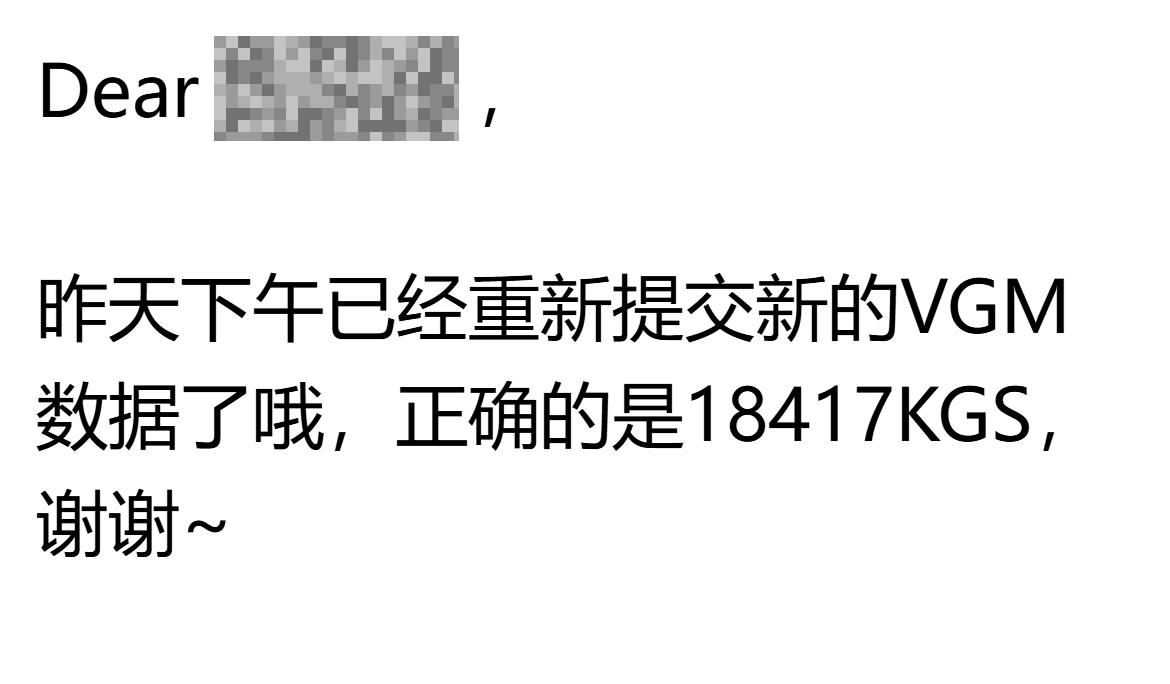
The next day, the carrier queried the earlier 36,384 kg figure because it exceeded the tank’s maximum gross weight. We replied that the corrected figure had already been resubmitted the previous afternoon, keeping the follow-up tied to the accepted submission.
Customer clarification and our follow-up
The customer explains the intended VGM as tank tare plus declared residue.
We confirm to the carrier that the corrected 18,417 kg VGM was resubmitted the previous afternoon.
Coordinate rate filing and the receiving window.
The carrier had advised that the rate had expired. We followed up on the SOC rate filing and told the customer to arrange gate-in on the stated opening day. When the customer said waiting until morning could incur truck waiting charges, we confirmed the arrangement for after midnight, once that day had begun.
We subsequently reported gate-in and rate filing to the carrier. These operational updates were followed by the carrier’s bill of lading, which recorded receipt and loading of the tank.
Gate-in timing agreed with the customer
We confirm the after-midnight gate-in arrangement for the receiving day.

From release to loading · January 2026
Booking release
Carrier confirmation
Release follows the earlier status correction.
Weight correction
VGM accepted
The carrier accepts 18,417 kg.
Cargo receipt
Receipt recorded
The final carrier bill records receipt.
Tank loading
On board
The bill records loading the following day.
The carrier’s loading record
Receipt and on-board fields · January 2026.
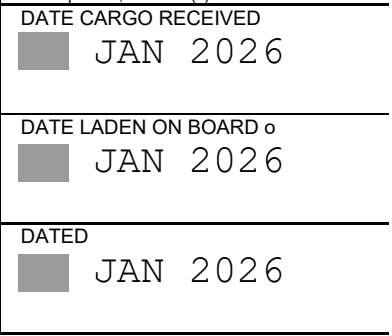
Loaded at Hong Kong for Long Beach.
The tank was recorded on board at Hong Kong in January 2026 for the Long Beach shipment. The carrier had accepted the corrected VGM, and its final bill of lading recorded cargo receipt followed by loading the next day. We subsequently supplied the telex-release house bill to the customer.
Our contribution was to connect the details that could otherwise remain in separate conversations: checking the premature booking confirmation, obtaining the customer’s weight clarification, following up on the corrected submission, and coordinating rate filing and gate-in timing. The customer’s restarted shipping plan progressed to a documented loading.