Project cargo · Pre-holiday equipment coordination
10 flat racks before Lunar New Year: urgent coordination with OOCL EQM
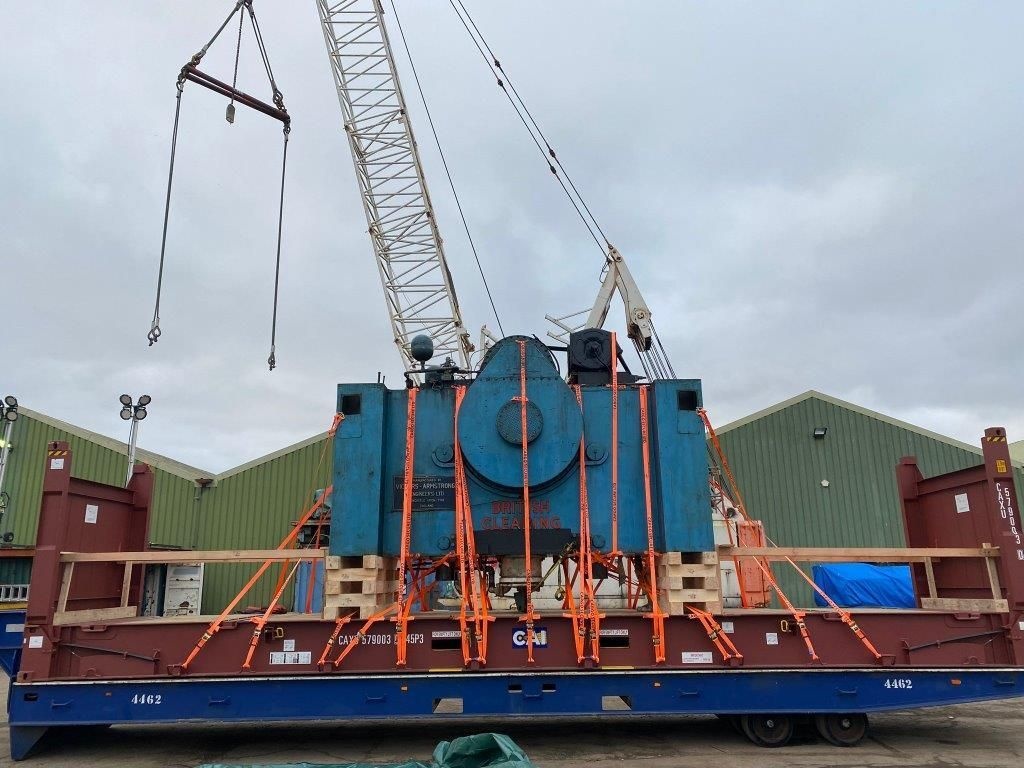
Four bookings and ten 20-foot flat racks, with the factory about to close and its lashing crew already arranged. Space and equipment were both tight. Through our working relationship with OOCL, we connected sales, project booking, EQM, terminal gates and the repair depot to arrange equipment in stages, change pickup locations and find an inspection-and-repair route for the final outstanding unit.
Project case · January 2025
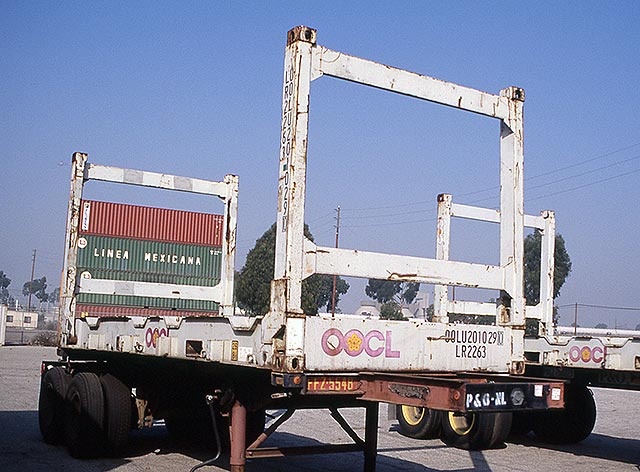
- Project scale
- 4 bookings · 10 × 20FR
- Route
- Yantian, China → Long Beach, USA
- Coordination
- OOCL EQM · Yantian / Shekou · Repair depot
The factory was closing. Space and equipment were both tight.
In January 2025, a project of stamping dies and related cargo was scheduled from Yantian to Long Beach: four bookings and ten 20-foot flat racks, including both over-width and in-gauge cargo. One requested sailing had no space. We followed up on alternative sailings and booking releases while handling revised dimensions, equipment requirements and rates.
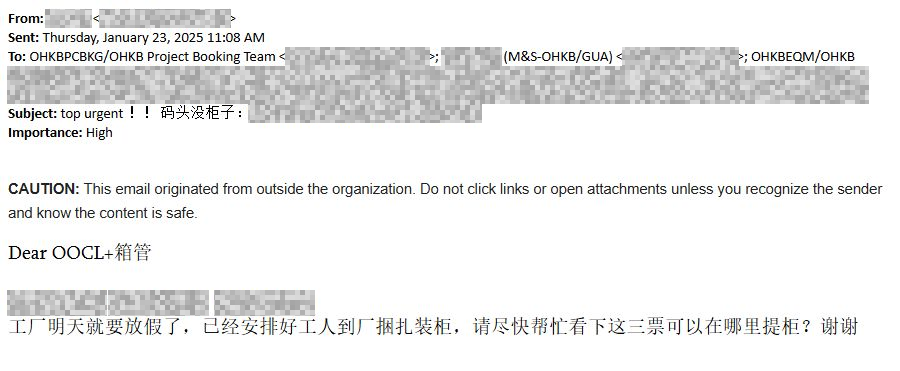
As Lunar New Year approached, empty equipment became the immediate problem. Pickup documents were arranged, but drivers were told there were no containers. On 23 January, the factory advised that it would close the next day, with its lashing and loading crew already arranged. Some SI and full-container deadlines had also moved forward, leaving a tighter operating window.
Turning carrier cooperation into practical arrangements.
Bring sales, project booking and equipment management into one response.
We escalated the factory deadline and shortages across the bookings to OOCL sales, project booking and EQM. Sales promptly helped involve equipment management in checking 20FR availability, while we tracked pickup locations, document changes and remaining requirements by booking.
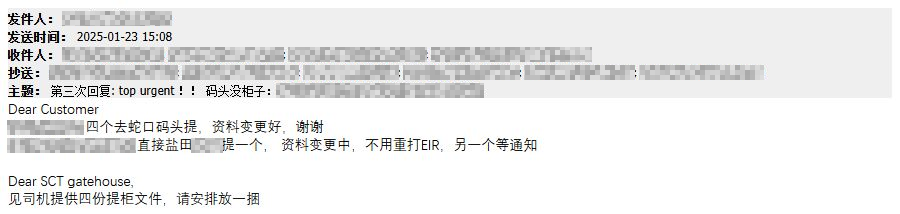
At 15:08 on 23 January, EQM confirmed four flat racks for Shekou pickup, updated the pickup information and instructed the terminal gate to release one bundle against four pickup documents. Equipment coordination became a specific release instruction.
With drivers still waiting the next morning, EQM advised at 09:50 that three units could be collected at SCT first. We immediately notified the customer and continued following the remaining equipment, including a pickup change from Yantian to Shekou.

Resolve the final shortage through an urgent equipment and repair arrangement.
As equipment became available in stages, attention narrowed to the last outstanding unit. On the evening of 24 January, EQM proposed releasing a flat rack requiring repair and routing it to a designated depot for inspection and repair.
We supplied the latest pickup status and the driver’s expected arrival time. EQM checked the documents held by the driver and asked when the driver could enter the terminal so the depot could retain or dispatch repair staff. It then issued gate and depot instructions, arranging an 08:00 inspection and repair visit for the following morning and requesting priority handling.
Equipment location, gate documents, driver timing and the receiving depot were coordinated through the same communication chain. A responsive carrier relationship provided a practical route for the final unit.



Secure operating extensions while equipment and documentation are being coordinated.
Alongside the equipment arrangements, we requested extensions for SI, full-container delivery and release-voucher submission. As container numbers became available, we supplied the details so the terminal arrangements could follow.
The SI window was extended to 10:00 on 26 January, and the CY/RV window to 18:00 on 27 January. We continued obtaining the required confirmations against the actual vessel schedule and container numbers, while following up on customer VGM and SI information.
From escalation to ocean departure · 2025
23 January
Arrange equipment in groups
Sales and EQM coordinate a four-unit bundle release and staged pickup.
24 January
Coordinate the final unit
Change pickup arrangements and connect priority inspection and repair with operating extensions.
25–26 January
Gate in the final two units
The last two flat racks are received full at Yantian.
30 January–1 February
Load and depart
Both units load and depart Yantian on 1 February.
Equipment arranged in stages; the final two units gated in and sailed.
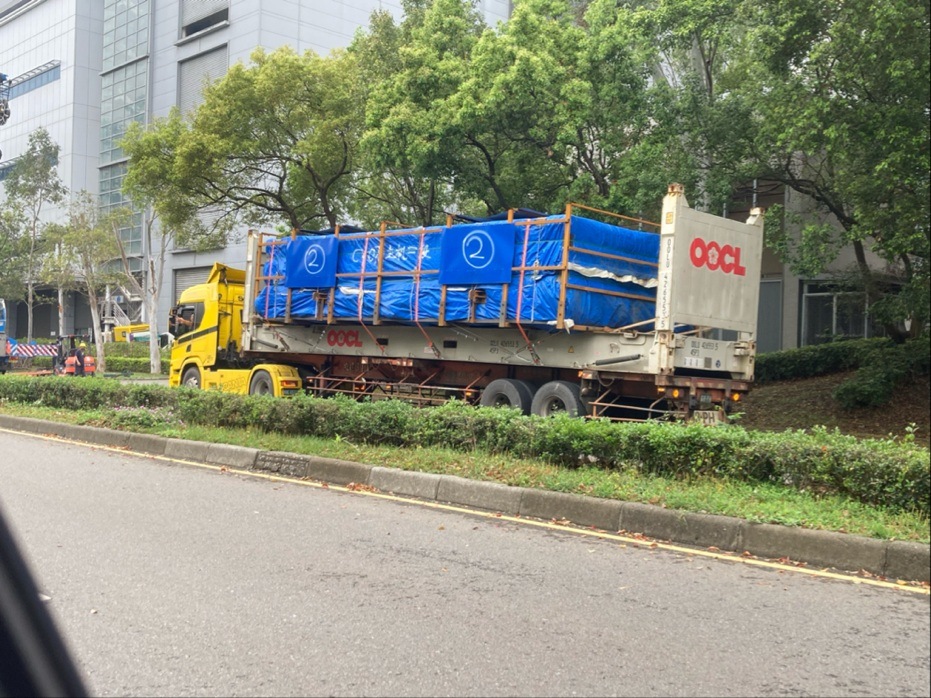
As pickup arrangements were progressively resolved, the final two units moved through the remaining operations. One was collected empty on 24 January and returned full on 26 January. The other was collected and returned full on 25 January. They loaded on 30 and 31 January respectively and departed Yantian on 1 February.
The value lay in turning carrier cooperation into practical action. We kept the factory, driver and documentation details moving while OOCL sales, booking, EQM and depot teams coordinated equipment, pickup changes, inspection and repair arrangements, and operating windows.


Follow through on equipment changes and billing corrections.
Early in the project, a four-unit group changed from 20OT to 20FR, and cargo dimensions were updated repeatedly. We checked equipment requirements, booking remarks and IG/OOW classifications with the customer and carrier, carrying the changes through into documentation and billing checks.
After the holiday, we checked freight and storage charges against final dimensions and equipment movements, pursuing invoice revisions and credits. Storage was removed for one in-gauge container, and the customer invoice for the final two-container booking was updated and confirmed on 7 February.
From space and equipment arrangements to operational coordination and billing corrections, follow-through continued across the key stages of the project.