OOG & special equipment · Urgent coordination
A last-minute height change. New equipment, the same voyage.
As the shipping-instruction cutoff approached, the reported height of a long piece of equipment bound from Yantian to Savannah changed from 1.8 to 2.2 metres. We coordinated the carrier’s teams on a high-cube flat rack, an empty return, a replacement booking and late documentation, then followed the overnight operation through to loading on the planned voyage.
5 MIN READ
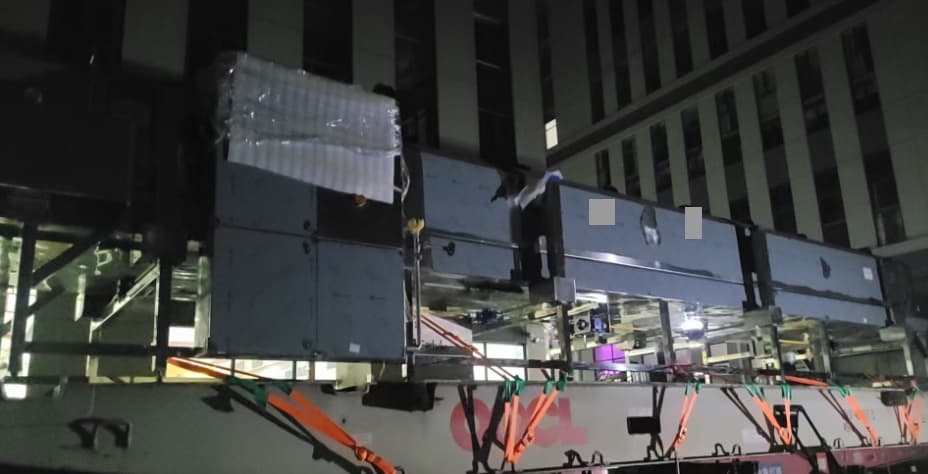
- Route
- Yantian, China → Savannah, US
- Cargo / revised dimensions
- Tunnel-freezer equipment · 11.3 × 2.2 × 2.2 m
- Revised booking
- 1 × 40FQ high-cube flat rack · Carrier-confirmed in-gauge
The cargo was ready. The original equipment plan needed to change.
The customer needed to ship liquid-nitrogen tunnel-freezer equipment from Yantian to Savannah. Special-equipment space was tight, and the customer wanted an earlier departure. We continued working with the carrier and secured a late-June booking.
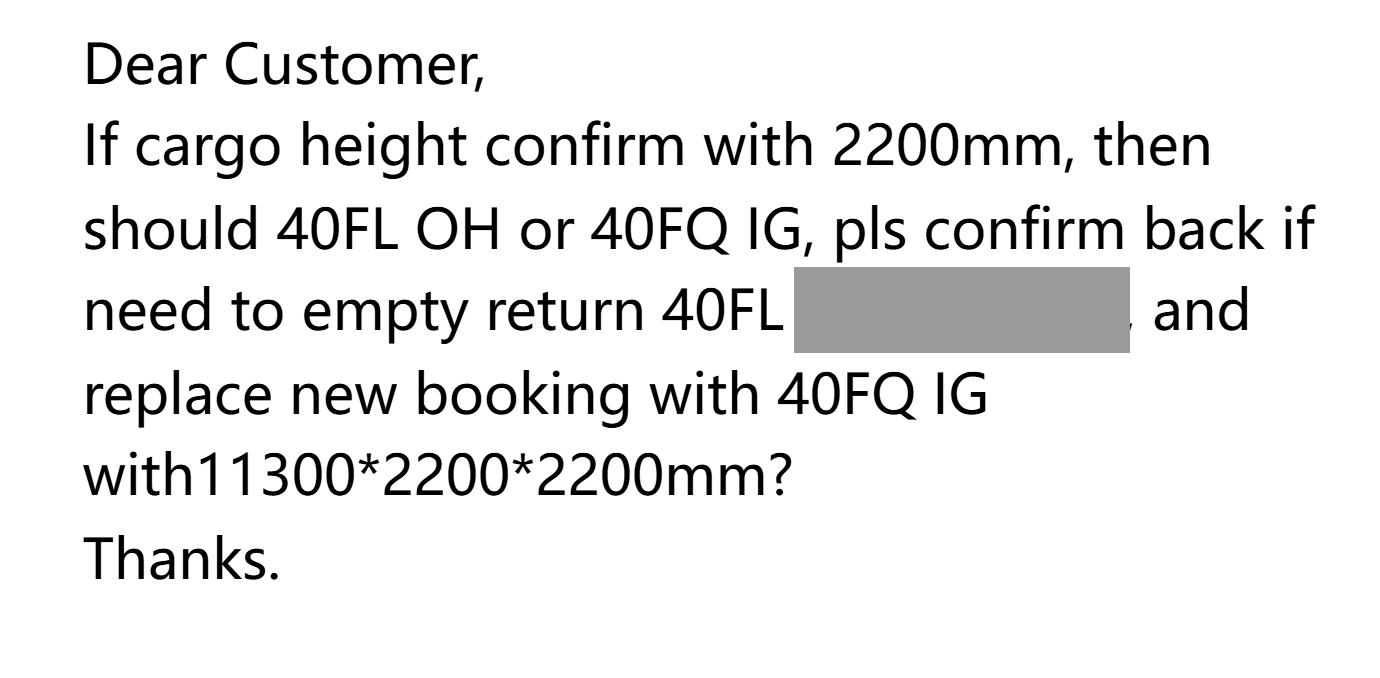
On the SI cutoff day, the customer confirmed that the equipment was 2.2 metres high, rather than the originally reported 1.8 metres, and could not be reduced in height. The carrier identified two options: treat it as over-height on the original 40FL equipment, or rebook it as in-gauge on a 40FQ high-cube flat rack.
By then, the original shipping-instruction deadline had arrived. Keeping the voyage within reach required coordinated action on the empty return, replacement equipment and space, late-document permission, and the customer’s pickup and loading arrangements.
Connect the equipment decision with space, documents and site operations.
Confirm the dimensions and establish a workable equipment plan.
We checked the height with the customer, obtained the revised dimensions and raised the change with the carrier’s sales and project-cargo booking teams. Following the options offered by the carrier, we confirmed the 40FQ in-gauge solution and followed up on the empty-return and replacement-booking requirements.
The new booking declared dimensions of 11.3 × 2.2 × 2.2 metres, and the carrier’s booking acknowledgement expressly stated “In Gauge”. This aligned the equipment plan with the revised dimensions before the next stage of operations.
The carrier’s response to the revised dimensions
The carrier identifies the over-height option on 40FL and the in-gauge option on 40FQ.
Advance the empty return and new booking alongside the customer’s site preparations.
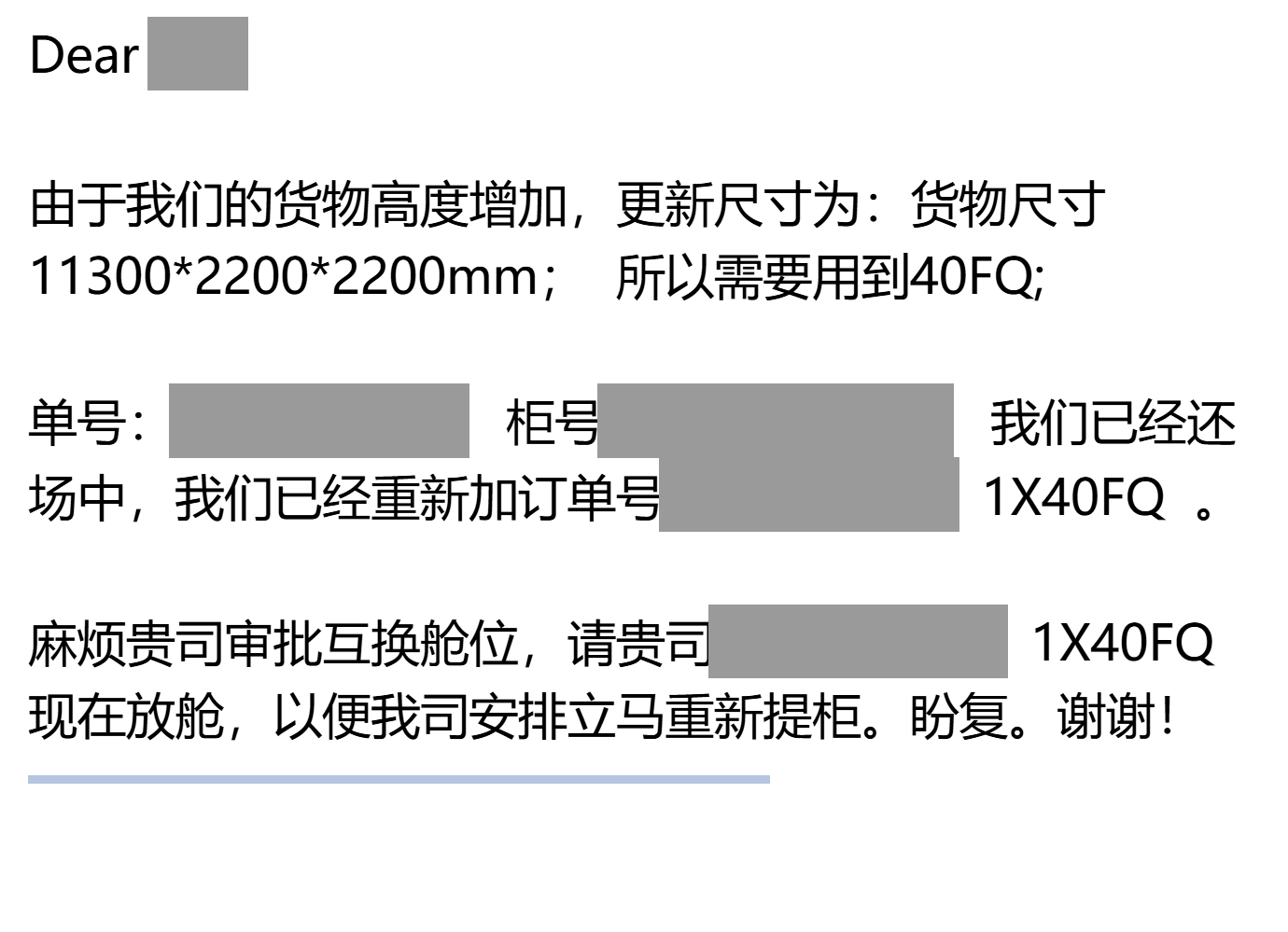
We followed up with carrier customer service on the empty-return charges and designated depot, passed the requirements to the customer, and urgently requested replacement space from the sales, project-booking and customer-service teams. We made clear that the customer needed the new booking and equipment pickup that day.
The customer had kept vehicles and loading personnel available and reported completion of the old container’s empty return that afternoon. We continued following up by email and telephone, then passed on the new booking as soon as it became available towards the evening. Later that night, the customer confirmed that the replacement container had been collected and was ready for loading.
Escalating the replacement-space request
We connect the height change, empty return and replacement booking in an urgent request for equipment pickup.
Secure a late-SI window and submit within it.
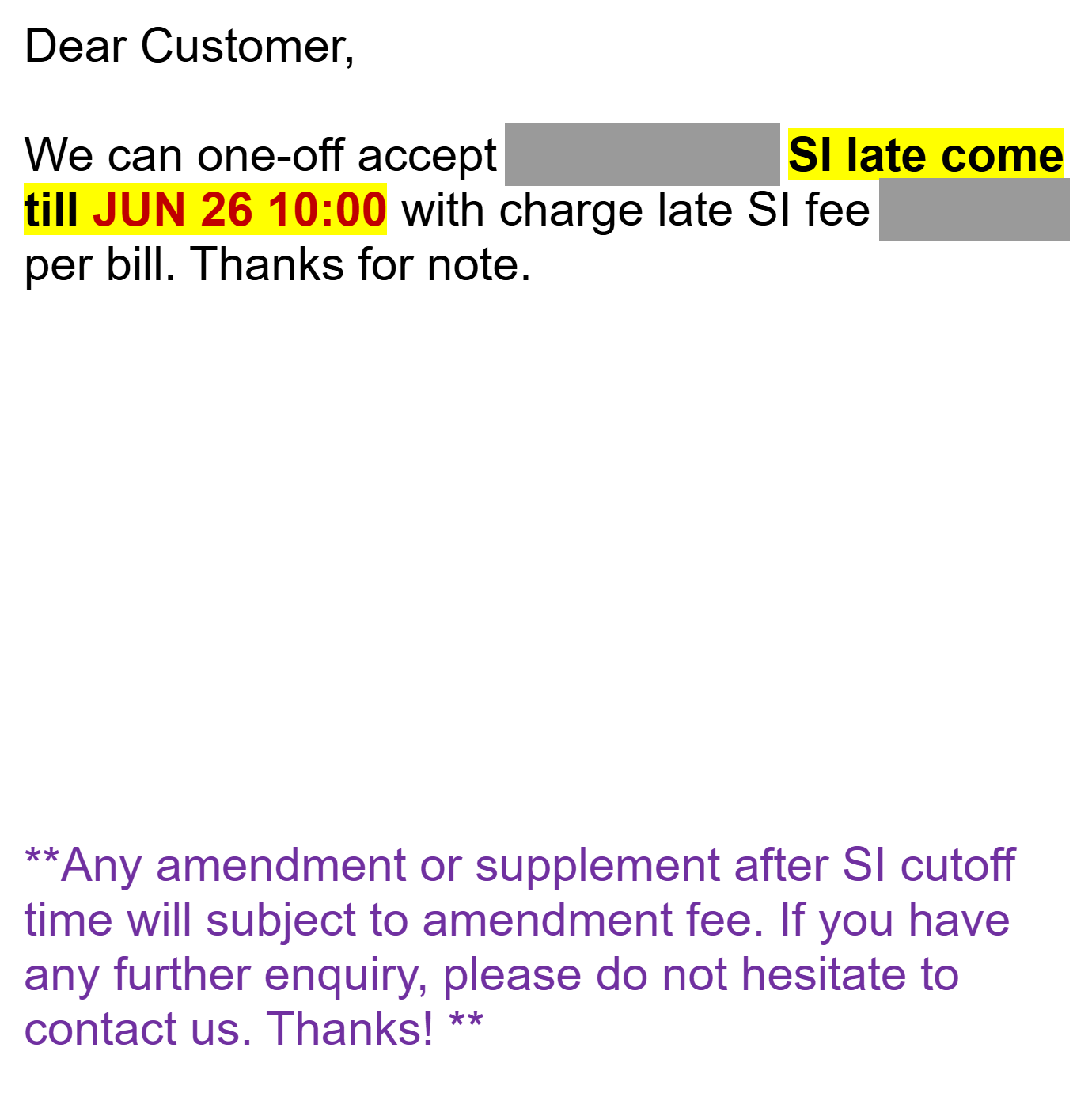
The equipment change required updates to the booking number, container number, weight and shipping instructions. We requested a late-SI exception from the carrier’s documentation team and obtained written acceptance up to 10:00 the next morning. We also advised the customer that a late-SI charge would apply.
We set an earlier customer-document deadline of 09:00 to allow time for checking and submission. After receiving the updated details the next morning, we submitted the SI at 09:35, as recorded in the system acknowledgement, before the approved cutoff. We then emailed the documentation team to identify the submission to use.
The approved window and submission record
A one-off late-SI acceptance until 10:00 the next day, subject to the stated fee and amendment conditions.
The SI submission is recorded at 09:35 the following morning.

Continue through the night and follow the shipment to loading.
After the booking was released, we continued following up on the revised equipment rate, laden-container return arrangements and relevant cutoffs. We requested loading and securing photographs and kept the customer updated that night on the expected return window. The customer arranged the site vehicles and personnel; we connected those preparations with progress at the carrier.
The customer sent night-time operation photographs the next morning. We relayed approval of the same-rate request and reminded the team to meet the late-SI deadline. Carrier customer service confirmed that morning that a laden-container return was already recorded. We continued monitoring the vessel and container status through to confirmation of loading.
From the replacement booking to laden return
Customer service confirms an existing laden-return record and asks for timely release arrangements.

From revised dimensions to loading · June 2026
25 June
Revised plan and new booking
The 40FQ in-gauge plan, empty return, replacement space and late SI are coordinated; the customer collects the new container that evening.
26 June
SI submitted; laden return confirmed
SI is submitted at 09:35 before the approved 10:00 cutoff. The carrier separately confirms a laden-return record.
29 June
Loaded on the planned voyage
The status screenshot shows loaded; the telex-release house bill records the same on-board date.
The loading records
The shipment’s laden-on-board date field.

The terminal-status screenshot retained in the shipment correspondence shows “loaded”.

Replacement equipment, with the planned voyage retained.
The shipment used a 40FQ high-cube flat rack and was loaded on the same vessel and voyage shown in the earlier booking. The telex-release house bill records 29 June as the on-board date. The booking had shown an estimated departure on 28 June, and subsequent correspondence reported a vessel delay. A late-SI fee applied, and the old container’s empty return also involved charge arrangements.
This case demonstrates our coordination of special-equipment and OOG work: checking the revised equipment solution with the carrier, connecting the empty return and replacement space with document permissions and the customer’s site preparations, then following through to laden return and loading. The customer was able to retain the planned voyage after a last-minute equipment change.