Freight Notes 03
Your factory can fill the container. Can your U.S. warehouse unload it as planned?
A shipper on Reddit posted a photo of a loaded container. A floor-loaded delivery appointment was already booked, but one question was still bothering them: would the warehouse accept cartons stacked so close to the doors? Original post
The container was loaded before the unloading question was settled. That's a conversation worth having earlier.
We've encountered similar situations. One previous shipment involved 1,046 cartons across four SKUs. With that much loose cargo, fitting it into a container is only part of the job. Someone at destination still has to unload those cartons and get them ready for receiving.
A forklift still needs an unloading crew
In a floor-loaded container, cartons are stacked directly inside without pallets. That can make good use of container space. At the warehouse, though, the cartons need to come out individually. Sorting by SKU, palletizing and labeling may follow.
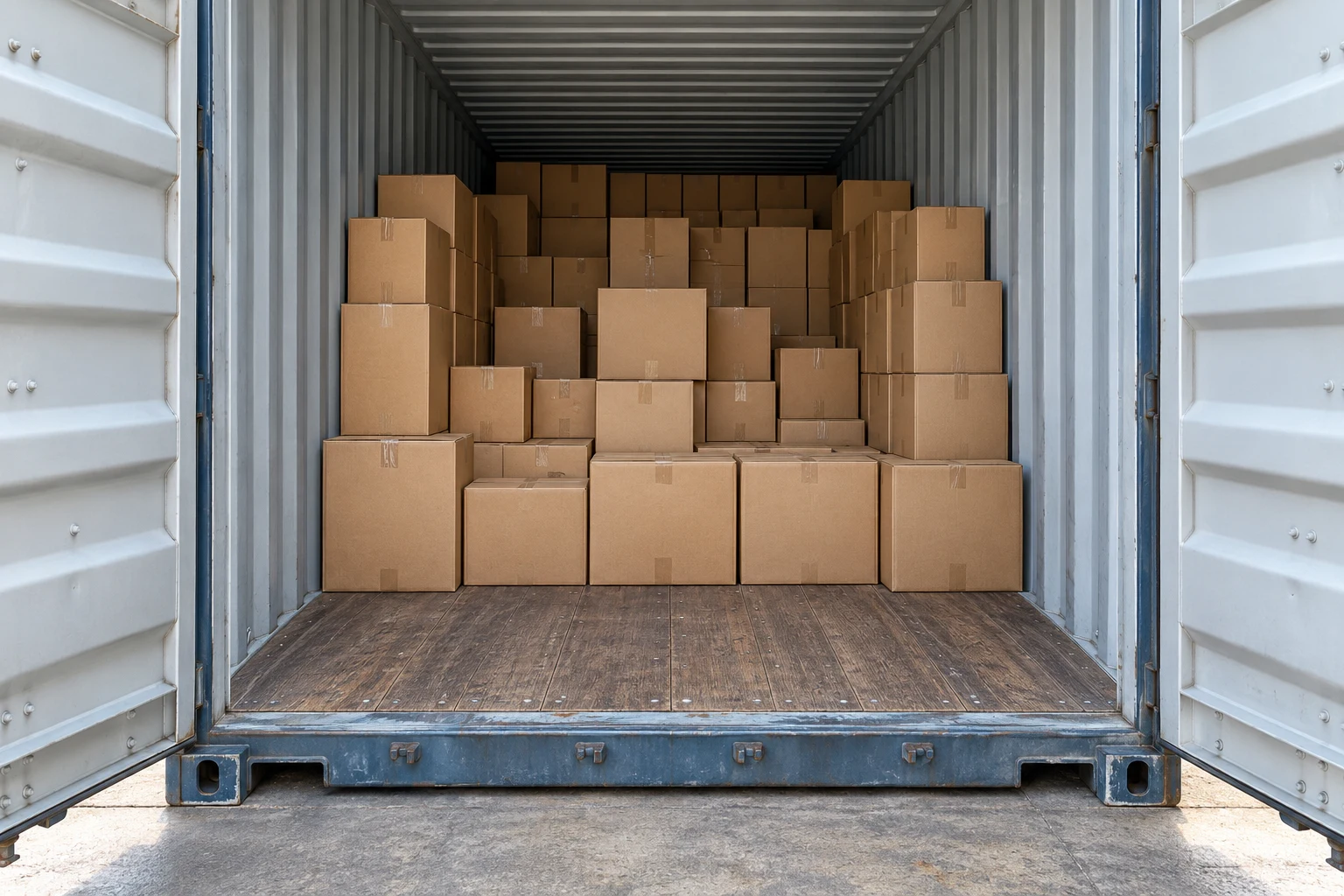
A forklift moves pallets. You still need to ask who will unload the loose cartons, whether the crew is booked and how long the work should take.
Brandfox's receiving guidelines, for example, say floor-loaded inventory is sorted and palletized at receiving, with labor and materials charged separately.
Flexport's container-unloading and prep guidance calls for the container to remain at the fulfillment center for two business days. Live unloads aren't offered.
Once the warehouse agrees to receive the shipment, match that arrangement with the trucker. If the quote assumes the driver waits while the warehouse needs to keep the container, the delivery plan needs updating. A drop and later empty pickup can add another trip, chassis use and container charges. Live unloads and drops explained
How could you arrange this load?
For those 1,046 cartons and four SKUs, there are three routes to compare. Start with how the U.S. warehouse receives cargo, then decide how the factory should load it.
Palletize at the factory in China.
If the destination receives pallets, give the factory its pallet dimensions, stacking and labeling requirements. The warehouse can then unload the pallets on arrival.
Ask the factory to recalculate capacity. Adding pallets can change how much fits. If some cartons have to travel separately, include their transport cost and arrival timing—not just the palletizing charge.
Send the floor-loaded container directly to the warehouse.
If the warehouse can handle the load, book the people and work involved: unloading cartons, sorting the four SKUs and building pallets. Confirm who supplies the pallets and how long unloading should take.
Then take that plan to the trucker. Can the driver wait? How much waiting is included, and what happens after it runs out? If a drop is needed, can it be arranged, and when will the empty be collected?
Unload and palletize at a U.S. transload warehouse, then deliver onward.
This is worth comparing if the destination only receives pallets and palletizing in China affects container capacity.
The transload facility receives the container, unloads and sorts the cargo, builds pallets and arranges onward delivery. Ask for the whole job, including storage, pallet materials and the second transport leg. Confirm when the destination can receive the prepared load, too.
Ask for more than an unloading price
Three quotes can look comparable while covering different work: palletizing in China, unloading at destination or unloading at a transload facility.
What you want to know is: What will it cost, and how long will it take, to get all 1,046 cartons into the destination warehouse and finish the container and chassis returns?
Include separate transport for any cartons left behind, onward delivery after transloading, and pickup and equipment use after a drop. Don't add the same charge again if it's already included in a quote.
Floor loading isn't always cheaper, and palletizing isn't always the better fit. First check whether the cargo, warehouse and trucking arrangements work together. Then compare the full cost.
Before loading, send the warehouse carton counts, dimensions, weights, the SKU breakdown and a proposed layout. Get its receiving plan, confirm live unload or drop arrangements with the trucker, and pass the final requirements to the factory.
Add actual photos after loading. If counts, labels or the loading method change, let the warehouse and trucker know.
Next time you ask the factory whether the order fits, put three more questions to the U.S. warehouse: Who unloads it? How long will it take? Does the driver wait or leave the container?